






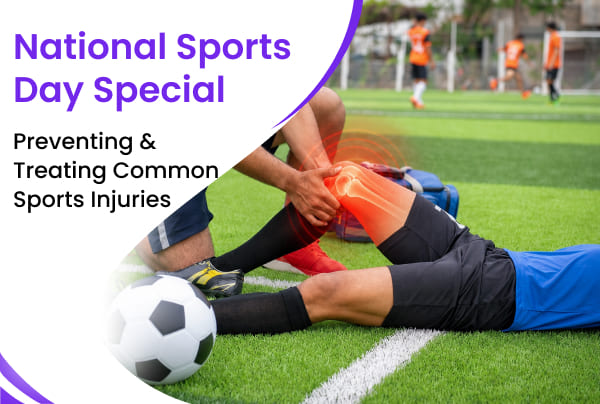
Every year on 29 August, India celebrates National Sports Day to honour hockey legend Major Dhyan Chand. It's a day built around movement, competition, and physical excellence. But every athlete — from a school cricketer to a weekend marathoner — knows that sport also comes with risk. Sports injury prevention and treatment is something every active person should understand, not just professional athletes. This National Sports Day, let's look at how common sports injuries happen, how to avoid them, and what to do when they happen anyway.
What Are Sports Injuries? Common Types, Symptoms, and Causes
A sports injury is any damage to muscles, bones, ligaments, tendons, or joints caused by physical activity. They fall into two broad groups:
- Acute injuries – sudden events like a fall, twist, or collision. Examples: ankle sprains, fractures, dislocations.
- Overuse injuries – gradual damage from repetitive stress. Examples: tennis elbow, shin splints, stress fractures.
The most common sports injuries include:
- Ankle sprains
- ACL and meniscus tears in the knee
- Shoulder dislocations and rotator cuff strains
- Tennis elbow and golfer's elbow
- Hamstring and calf muscle strains
- Shin splints
Symptoms usually include pain, swelling, stiffness, reduced range of motion, and sometimes visible deformity. Mild injuries may only cause discomfort during activity, while serious ones cause immediate, sharp pain and instability.
Sports Injury Prevention Tips for Athletes and Weekend Players
Most sports injuries are preventable with a few consistent habits:
- Warm up properly. Spend 8–10 minutes on dynamic stretches before any activity.
- Build strength gradually. Sudden spikes in intensity are a leading cause of overuse injuries.
- Use the right gear. Proper shoes and protective equipment matter more than most people realize.
- Don't skip rest days. Muscles and joints need recovery time to repair micro-damage.
- Focus on technique. Poor form during running, lifting, or jumping puts uneven stress on joints.
- Stay hydrated and fuelled. Fatigue and dehydration slow reaction time, raising injury risk.
- Cool down and stretch after activity to help muscles recover and stay flexible.
These habits won't eliminate risk completely, but they meaningfully lower it — and they cost nothing except a little discipline.
Knee Sports Injury Treatment Hospital in India- AJRC
The knee is one of the most commonly injured joints in sport, largely because it absorbs so much force during running, jumping, and pivoting.
- ACL tears — Common in sports involving sudden direction changes, like football or basketball. Partial tears may heal with physiotherapy; complete tears often need arthroscopic reconstruction.
- Meniscus tears— Cartilage damage from twisting motions. Treatment ranges from rest and physiotherapy to arthroscopic repair, depending on severity.
- Runner's knee — Overuse pain around the kneecap, usually managed with rest, strengthening, and gait correction.
India has strong access to advanced knee care, including arthroscopic surgery, which allows faster recovery than open surgery in many cases. Early diagnosis through clinical examination and MRI is key to choosing the right treatment path.
Shoulder Sports Injury Treatment Hospital in India- AJRC
Overhead and contact sports put the shoulder at high risk.
- Rotator cuff strains — Common in swimmers, badminton and cricket players. Mild strains respond well to physiotherapy; larger tears may need arthroscopic repair.
- Shoulder dislocations — Frequent in contact sports. First-time dislocations are usually treated non-surgically, but repeat dislocations often need surgical stabilization.
- SLAP tears— Labral tears common in throwing athletes, generally requiring arthroscopic treatment if conservative care fails.
Shoulder injuries are easy to underestimate because pain can feel manageable at first, even when there's real structural damage underneath.
When Should You Visit an Orthopedic Doctor for a Sports Injury?
Not every ache needs a doctor, but you should seek evaluation if you notice:
- Severe pain that doesn't improve within 48–72 hours
- Visible swelling, bruising, or deformity
- Inability to bear weight or move the joint normally
- A popping or tearing sensation at the time of injury
- Numbness, tingling, or instability in the joint
- Pain that keeps returning during the same activity
Delaying care for these signs can turn a manageable injury into a chronic problem needing long-term pain management. An orthopedic specialist can confirm the diagnosis with a clinical exam and imaging, then recommend the least invasive effective treatment.
Rehabilitation After Sports Injuries
Treatment doesn't end when pain fades — that's often where rehabilitation begins. A good rehab plan typically includes:
- Physiotherapy to restore strength, flexibility, and range of motion
- Progressive loading so the joint or muscle rebuilds tolerance safely
- Balance and neuromuscular training to reduce re-injury risk
- Sport-specific drills before a full return to competition
Skipping rehabilitation is one of the biggest reasons athletes reinjure the same area. A structured, supervised recovery is what actually determines whether someone returns to sport stronger — or ends up back in the clinic.
Why Choose AJRC for Sports Injury Treatment?
AJRC's dedicated Sports Injury Center in Patna, led by Dr. Ashish Singh, treats athletes of all ages and skill levels — from school-level players to serious competitors. Here's what sets the centre apart:
- Dedicated Sports Injury Center – A specialist team focused solely on athletic injuries, not a general orthopedic setup treating sports cases as an afterthought.
- Arthroscopic expertise – Minimally invasive treatment for knee, shoulder, elbow, and ankle injuries, meaning smaller incisions, less pain, and quicker return to activity.
- Advanced ligament and cartilage care – Meniscal, cartilage, and ligament reconstruction using current, evidence-based techniques rather than one-size-fits-all protocols.
- Outpatient-friendly procedures – Most arthroscopic surgeries are done on an outpatient basis, so patients are often home the same day.
- Robotic technology – Access to robotic joint care where indicated, adding precision to complex cases.
- Patna's first Smart ICU – Backup critical care infrastructure on-site for the rare case that needs it, giving patients and families extra peace of mind.
- Structured, guided rehabilitation – Physiotherapy and rehab support built into the recovery plan, not left for patients to arrange separately.
- 35+ years of combined orthopedic experience – A senior team, including Dr. Ashish Singh with decades of surgical and clinical practice.
- Affordable, transparent care – Indicative cost quotes provided upfront, with CGHS, ECHS, and Ayushman Bharat empanelment for eligible patients.
- Proven patient outcomes – A track record reflected in patient testimonials of returning to walking, work, and sport after treatment at AJRC.
This National Sports Day, don't ignore that nagging knee pain or shoulder discomfort. Whether you're managing a fresh injury or recovering from an old one, expert orthopedic guidance makes the difference between a short setback and a long-term problem.
Frequently Ask Question?
Sports injuries are damage to muscles, bones, ligaments, or tendons caused by physical activity. They can be sudden, like a sprained ankle from a fall, or gradual, like tennis elbow from repetitive strain. Both types can range from mild to severe and often need proper diagnosis before treatment begins.
Warm up before activity, strengthen supporting muscles, use proper technique and gear, and avoid sudden jumps in training intensity. Adequate rest between sessions also matters — overuse injuries are often caused by insufficient recovery time, not just poor form.
Ankle sprains and knee injuries, particularly ACL tears and meniscus damage, are among the most common sports injuries worldwide. Shoulder injuries like rotator cuff strains are also frequent, especially in overhead sports such as badminton, swimming, and cricket.
See a doctor if pain persists beyond 48–72 hours, if there's visible swelling or deformity, if you can't bear weight, or if you felt a pop or tear at the time of injury. Early evaluation prevents minor injuries from becoming chronic problems.
Recovery time depends on the injury type and severity. Mild strains may heal in 1–2 weeks, while ligament reconstructions can take 4–6 months for a full return to sport. A structured rehabilitation plan speeds up safe recovery.
RICE stands for Rest, Ice, Compression, and Elevation. It's a first-aid approach for mild sprains and strains, helping reduce swelling and pain in the first 48 hours. Persistent symptoms after RICE still need professional evaluation.
Many sports injuries, especially mild sprains, strains, and partial ligament tears, heal well with rest, physiotherapy, and bracing. Surgery is usually reserved for complete ligament tears, large rotator cuff tears, or recurrent joint instability.
Arthroscopic surgery is minimally invasive and performed under anaesthesia, so patients don't feel pain during the procedure. Post-surgical discomfort is generally much lower than with open surgery, and most patients go home the same day.
A gradual, supervised return through physiotherapy, strength training, and sport-specific drills reduces the risk of reinjury. Rushing back before full strength and stability return is one of the most common causes of repeat injuries.
Physiotherapy restores strength, flexibility, and joint stability that an injury disrupts. Skipping this step often leaves the area weaker and more prone to reinjury, even if the original pain has faded.
Dr. Ashish Singh at AJRC Patna is widely regarded as one of India's leading sports injury and orthopedic specialists. With decades of experience in arthroscopic and robotic-assisted surgery, he treats ACL tears, shoulder injuries, and ligament damage, helping athletes of all levels recover safely and return to sport with confidence.

